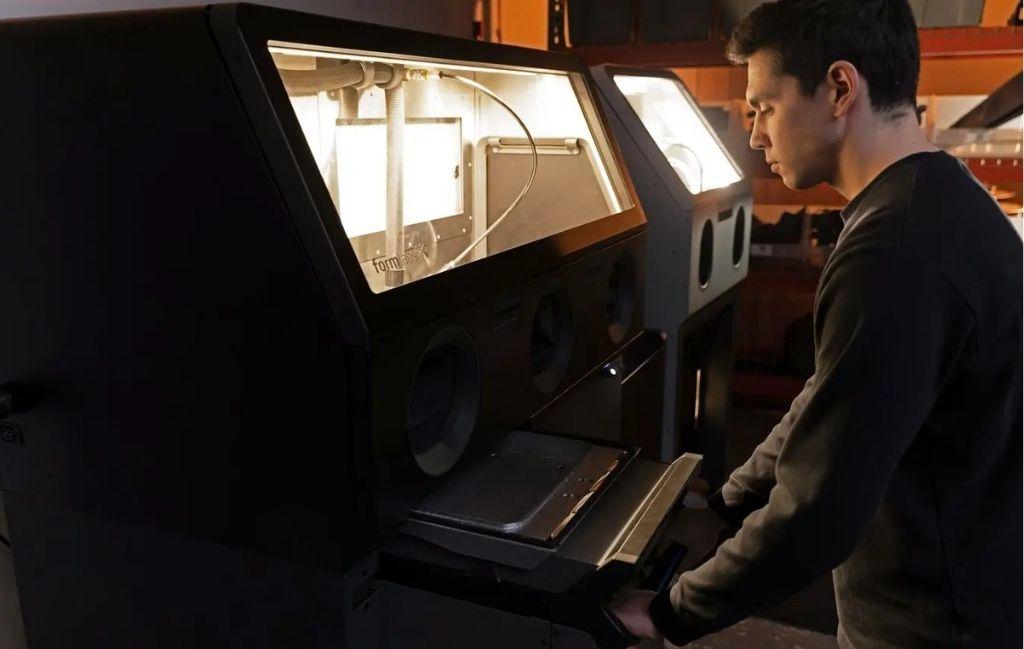



Operator using the Formlabs Fuse Sift X1 powder recovery station to depowder SLS parts

Is 3D Printing More Sustainable Than Traditional Manufacturing?

For low volumes and complex geometry, yes, 3D printing is usually the more sustainable choice. For high-volume production of simple parts, traditional manufacturing often wins on efficiency once tooling costs are spread across thousands of units. The honest answer depends on what you are making, how many you need and

Is 3D Printing More Sustainable Than Traditional Manufacturing? Read More »

3D printed drone flying in the sky

3D Printing for Drones: Materials, Parts and Applications

Drone manufacturers and hobbyist builders are turning to 3D printing because it solves a problem traditional manufacturing struggles with: producing complex, lightweight geometries quickly and without expensive tooling. Whether you are prototyping a new frame design or producing custom mounts for a commercial fleet, additive manufacturing has become a genuine

3D Printing for Drones: Materials, Parts and Applications Read More »

Formlabs Fuse X1 3D Printer in an organized working station

Formlabs Fuse X1: Large-Format SLS for Teams Outgrowing the Desktop

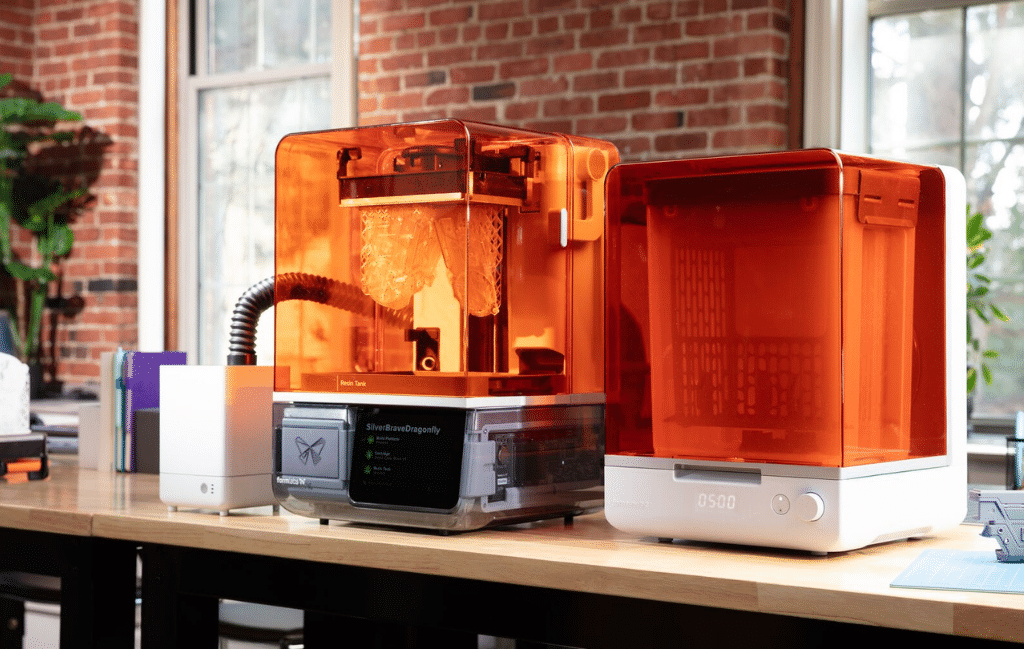
The Formlabs Fuse X1 sits at an interesting point in the market. It uses SLS (Selective Laser Sintering), a process traditionally associated with six-figure industrial systems, but at a price and footprint that engineering teams, manufacturers and service bureaus can realistically justify once they need real scale. SLS earned its

Formlabs Fuse X1: Large-Format SLS for Teams Outgrowing the Desktop Read More »

Bambu Lab AMS 2 Pro multi material 3D printer holding four filament spools

Bambu Lab AMS Explained: How Multi-Material Printing Actually Works

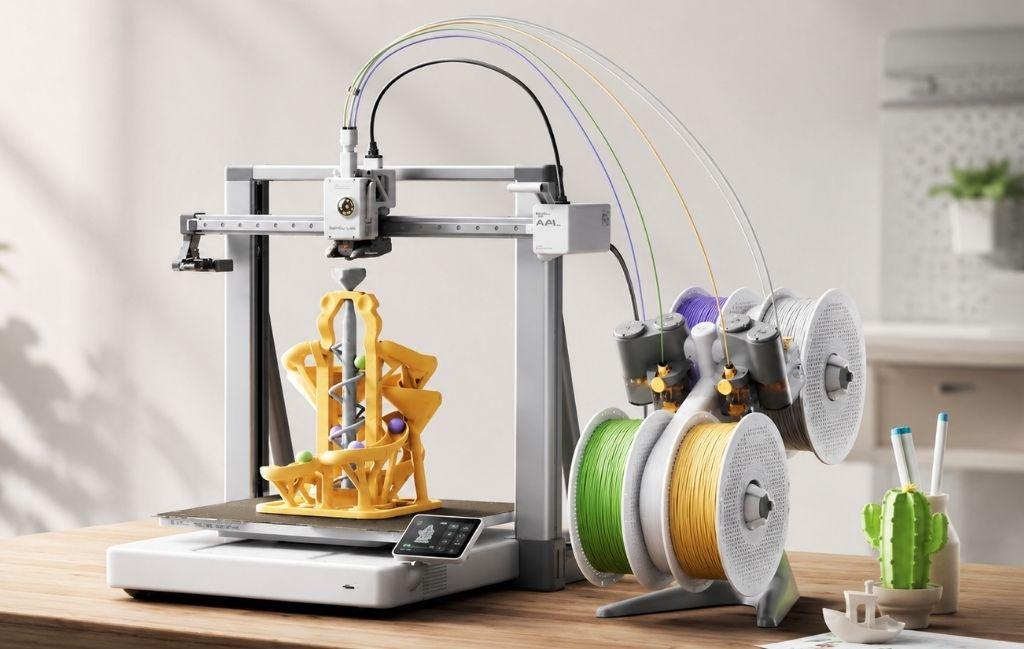
A multi material 3D printer used to mean expensive, complicated industrial equipment with a steep learning curve. Bambu Lab’s AMS (Automatic Material System) changed that, bringing genuinely practical multi-colour and multi-material printing to desktop machines at a price point most makers, schools and small businesses can justify. That shift matters

Bambu Lab AMS Explained: How Multi-Material Printing Actually Works Read More »

EufyMake E1 3D-texture UV printer with several full-colour raised-texture print samples displayed around it

EufyMake E1 Review: What the 3D-Texture UV Printer Can Actually Do

The EufyMake E1 is a different kind of machine to the FFF (Fused Filament Fabrication) and resin printers most people associate with 3D printing. It’s a UV printer that builds up genuine 3D texture, layer by layer, directly onto a flat or near-flat surface, combining full-colour printing with raised, tactile

EufyMake E1 Review: What the 3D-Texture UV Printer Can Actually Do Read More »

3D printed parts and post-processing tools including sanding blocks, files, cutters and safety equipment arranged on a workbench against a dark background.

Why Post-Processing is the Missing Piece in Your 3D Printing Workflow

3D printing post processing gets far less attention than the printer itself, yet it’s often the difference between a part that looks and performs the way it should, and one that doesn’t. Plenty of people invest in a capable printer, dial in their settings, and still end up disappointed with

Why Post-Processing is the Missing Piece in Your 3D Printing Workflow Read More »

composite 3D printing with markforged printer

Why Manufacturers Are Replacing Metal Parts with Markforged Composites

Composite 3D printing has reached a point where it can genuinely replace metal parts in some engineering and manufacturing applications, not just prototype them. Markforged has built its entire product range around this idea, embedding continuous carbon fibre into printed plastic parts to produce components that rival aluminium in strength-to-weight

Why Manufacturers Are Replacing Metal Parts with Markforged Composites Read More »