




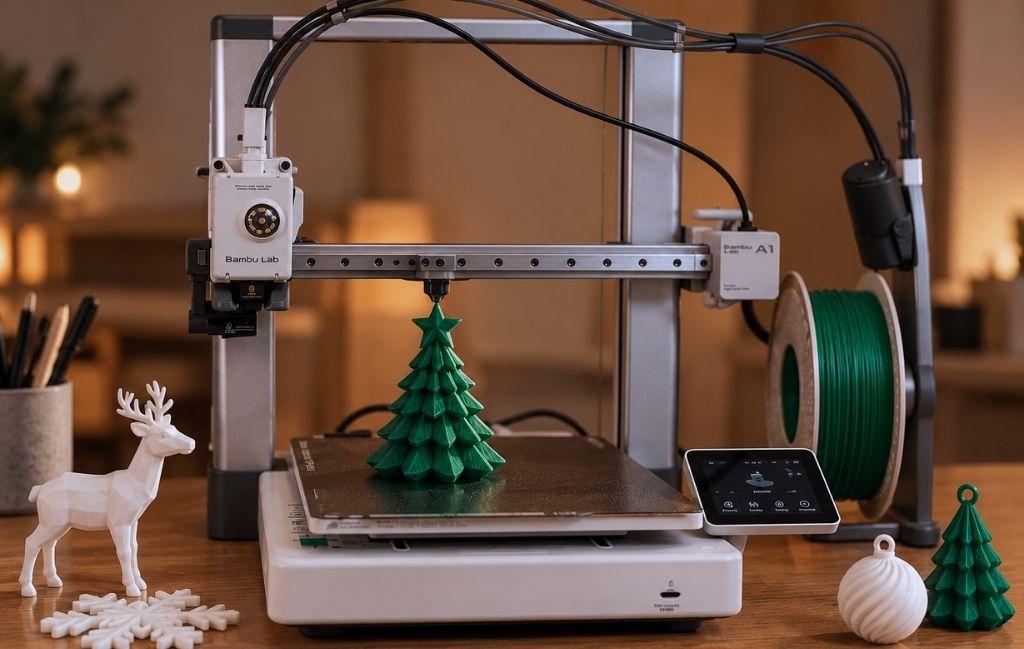
The run-up to Christmas is the busiest gift-buying stretch of the year, and it rewards anyone who can offer something a shop cannot: a product with a name, a date, or a photo built into it. 3D printing personalised gifts fits that demand well, because it needs no moulds, no minimum order of hundreds, and no long lead time. You can make one item or 50, each slightly different, and start the moment a design is ready.
This article looks at what sells, which technology suits which product, how to set up a repeatable personalisation workflow, and how to plan capacity so you are not printing baubles at midnight on the 23rd. It also covers honest pricing and the material limits worth knowing before you sell.
Why does 3D printing personalised products make sense at Christmas?
Traditional manufacturing punishes small, custom runs. Injection moulding needs a tool that costs thousands and only pays off over large volumes, so a one-off name ornament is out of the question. 3D printing personalised products flips that. The cost per item barely changes whether you make one or 100, and changing a name or a shape costs nothing but a few minutes at the computer.
That suits the gift season in three ways:
- Low commitment. You print to order, so you are not sitting on unsold stock in January.
- True customisation. Every item can carry a different name, date, or photo without a tooling change.
- Fast turnaround. A design finished in the morning can be printing by the afternoon and posted the next day.
For a small business or a maker, that combination is hard to beat in the weeks before Christmas.
What can you make? Popular personalised products
Almost anything with a name or a personal touch is fair game. The strongest sellers tend to be small and quick to print, which also keeps postage cheap:
- Ornaments and baubles with names or dates, often in more than one colour.
- Photo lithophanes. A lithophane is a thin printed panel that shows a photo when light passes through it, which makes a striking personalised gift or nightlight.
- Keyrings, bag tags, and luggage tags with names.
- Desk gifts such as pen holders, phone stands, and cable tidies with an engraved name or logo.
- Personalised cookie cutters in a name, initial, or custom shape.
- Detailed figurines, decorations, and miniatures for collectors.
- Place settings and name cards for the Christmas table, printed as a matching set.
- Matching family sets, such as named stockings toppers, ornaments, or advent markers.
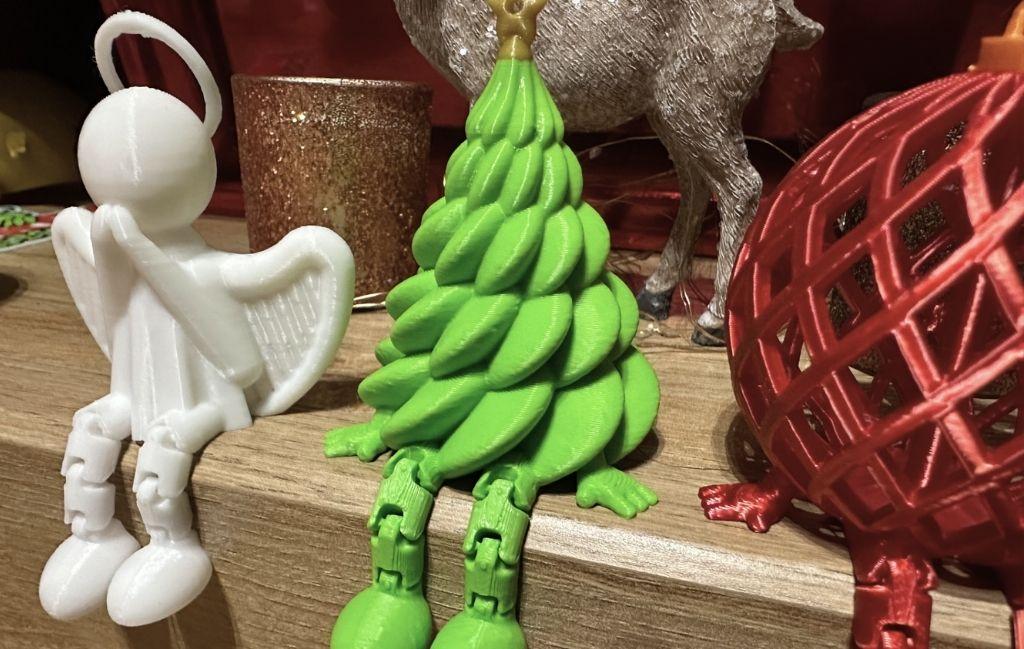
Two of these deserve a special mention for the season. Lithophanes turn a family photo into a glowing keepsake and photograph well when lit from behind, which makes them easy to sell online. Multi-colour name signs and decorations, meanwhile, look shop-bought rather than home-made, and the contrast of a coloured name against a plain background is often what makes a buyer choose yours over a generic version.
Multi-colour printing widens the range further. With a system that swaps filaments automatically, you can print a name or a logo in a contrasting colour in a single job, which lifts a plain item into something that looks bought rather than made at home.
Design tips for personalised prints that sell
A few design habits keep personalised items looking professional and printing reliably:
- Keep text legible. Bold, simple fonts survive printing far better than thin script. For raised (embossed) or recessed (debossed) text, aim for at least 0.8 to 1mm of depth so it reads clearly.
- Mind small features. Very fine details can fail or look rough on FFF, so if a design leans on delicate detail, print it in resin instead.
- Design for adhesion. Small items with a tiny footprint can come loose mid-print, so add a brim or print several together to keep them stuck down.
- Test one before a batch. Print a single copy of a new design and check the text, fit, and finish before committing a full plate.
These checks take minutes and stop a batch of gifts turning into a batch of rejects.
Choosing a technology for personalised products
The right process depends on the product, the finish you want, and how many you plan to make.
FFF for colour, speed, and value
FFF (Fused Filament Fabrication) covers the majority of personalised gift work. It is cheap to run, prints in a wide range of colours, and turns around ornaments, keyrings, and desk items quickly. Machines from Bambu Lab 3D printers add an AMS (Automatic Material System) that swaps between filaments during a print, so names and logos come out in colour without you standing over the machine. PLA is the usual choice for decorative items, with PETG where a little more toughness helps.
SLA for fine detail
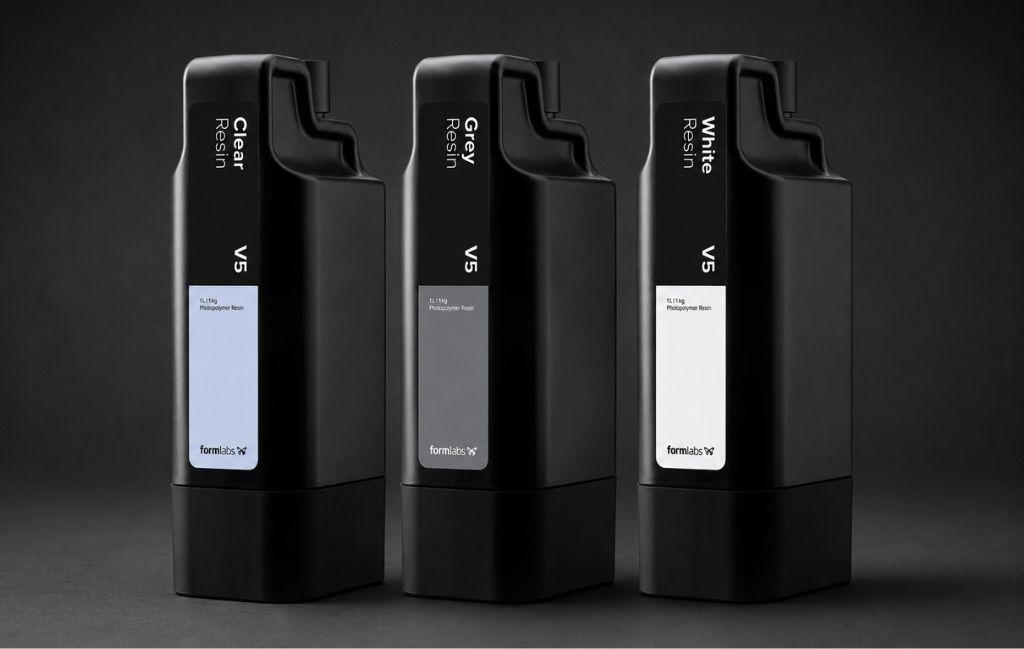
SLA (Stereolithography) cures liquid resin with light and gives the crisp detail that FFF cannot match. For detailed figurines, jewellery-style pieces, and keepsakes where fine features carry the value, a Formlabs 3D printers resin machine produces a smoother, sharper result. Resin work adds washing and curing steps, so it takes longer per item, but the finish justifies it for premium products.
Setting up a personalisation workflow
The trick to selling personalised items is making each one without redesigning it from scratch. A repeatable workflow does that.
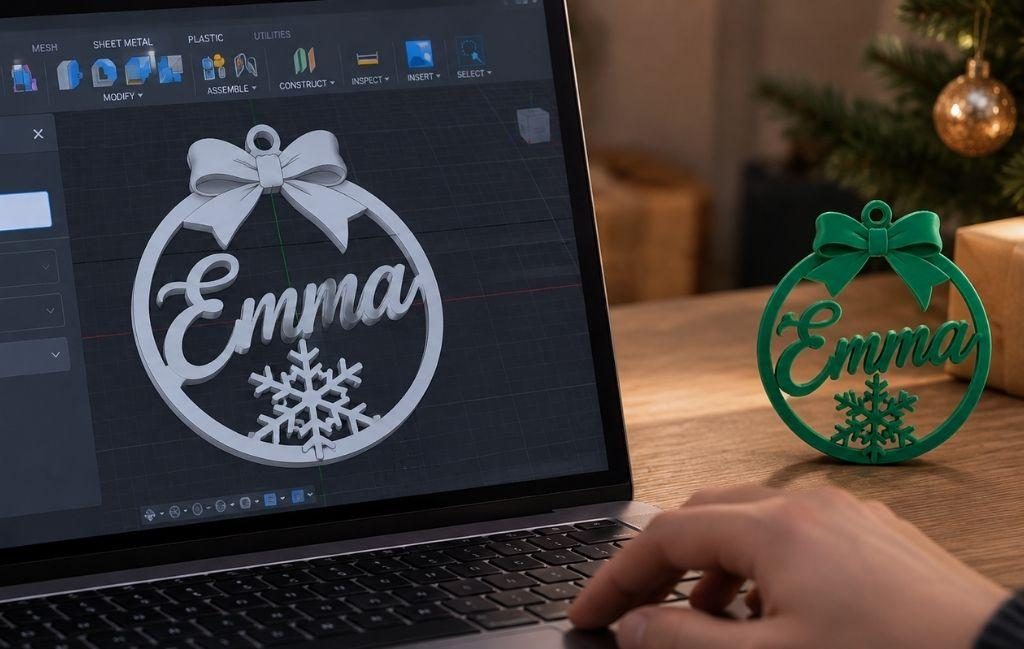
- Build a parametric template. In CAD (Computer-Aided Design) software, set up the model so the name or text is a single editable field. Swapping “Emma” for “Noah” then takes seconds, not a redesign.
- Nest multiple items per plate. Filling the bed with several personalised pieces at once cuts the number of jobs and the attention each one needs.
- Standardise your colours and settings. A fixed set of tested profiles keeps quality consistent across a busy season.
Set up well, 3D printing personalised products becomes a production line rather than a series of one-off projects. That is what lets you take a rush of orders in December without the quality slipping.
Planning capacity for the Christmas rush
Demand is not spread evenly. It builds through November and peaks in the fortnight before Christmas, then falls off a cliff once posting deadlines pass. Plan backward from those deadlines rather than forward from today.
Work out how long one item takes, including printing, any finishing, and packing. Multiply by your realistic order numbers, then check that against the hours your machines can actually run. A single printer running a 40-minute ornament manages a couple of dozen a day if you keep it fed. Larger orders need more machines, or longer lead times quoted to customers. If orders outrun your capacity, a print service such as the Digital Parts Factory can take the overflow so you do not turn work away.
Pricing and materials for saleable products
Price from real costs, not guesswork. For each item, add up:
- Material. Weigh the print or read it from the slicer. A 30g PLA ornament at around £20/kg costs about £0.60 in material.
- Machine time. Electricity is small per print, but wear and machine occupancy have a value, especially at peak.
- Labour. Design setup, plate changes, finishing, and packing are where the real time goes.
- Packaging and postage. Easy to forget and quick to erode a margin.
The personalisation itself carries a premium, because the buyer cannot get it anywhere else, so do not price these as plain plastic parts. A named ornament that costs you under a pound in material can sell for several times that, with the value sitting in the customisation rather than the plastic.
On materials, be honest about limits. PLA and PETG are fine for decorative gifts, but standard desktop prints are not certified food-safe, so treat items like cookie cutters as tools for cutting dough rather than food-contact products, and say so to customers. Layer lines are part of the look too. A printed item does not have an injection-moulded finish, and most buyers are happy with that as long as you are upfront about it.
Where does 3D printing stop making sense?
3D printing wins at low volume and high customisation. It is not the tool for thousands of identical units, where injection moulding is cheaper per part once the tooling is paid off. The line sits roughly where an item stops being personalised and becomes a standard product ordered in bulk. For a seasonal run of custom gifts, though, you are firmly in the territory where printing on demand beats holding stock. Knowing that line keeps expectations realistic and stops you chasing volumes the process was never built for.
Marketing and selling your personalised products
Making the item is half the job. Selling it well is the other half, and a few things make a real difference at Christmas:
- Show a clear proof. Send the customer a quick preview of how their name will look before you print. It cuts spelling mistakes and reassures the buyer.
- Photograph the finished result properly. Well-lit photos of a real printed item sell far better than a screen render, especially for lithophanes lit from behind.
- Bundle and upsell. A named bauble pairs naturally with a matching gift tag or a set for the whole family, which lifts the order value.
- Quote honest lead times. Be clear about your last order date for Christmas delivery and stick to it, because a late gift is a lost customer.
Selling personalised products is as much about trust as it is about the print. Buyers are ordering something they cannot see first, so proofs, clear photos, and firm deadlines carry the sale.
Getting started with 3D printing personalised products
If you are adding 3D printing personalised products to a small business or starting one around it, the entry cost is low. A single FFF printer, a stock of PLA in popular colours, and a parametric template or two will get you selling. Add multi-colour capability when names and logos become the draw, and a resin machine later if you move into detailed premium pieces.
A sensible first setup looks like this:
- One FFF printer, ideally with multi-colour support, from the Bambu Lab 3D printers range.
- A range of 3D printing filament in seasonal colours.
- A simple finishing kit for deburring and tidying prints.
- Postal packaging that protects small items in the post.
Start early. The makers who do well at Christmas have their templates, colours, and workflow settled before the orders arrive.
Final thoughts
The gift season rewards products that feel personal, and 3D printing personalised products delivers exactly that without the tooling costs and large minimum orders of traditional manufacturing. Ornaments, lithophanes, keyrings, and detailed keepsakes all sell well, and a parametric template turns each custom order into a quick job rather than a fresh design.
Get set up before the rush, price from real costs, and be honest about finish and food-contact limits. A single multi-colour FFF printer covers most of what sells, with resin added later for premium detail and a print service on hand for overflow. If you want help choosing a machine to build a seasonal product line around, our team in Ripon can talk through the options and show you sample prints. Book a demo or call us to get started before December fills up.