




For low volumes and complex geometry, yes, 3D printing is usually the more sustainable choice. For high-volume production of simple parts, traditional manufacturing often wins on efficiency once tooling costs are spread across thousands of units. The honest answer depends on what you are making, how many you need and which traditional process you are comparing it against.
This article compares 3D printing with the two most common traditional methods, CNC machining and injection moulding, across the factors that actually determine environmental impact: material waste, energy use, tooling and scale.
Material waste: additive vs subtractive
This is where the comparison is most clear cut. CNC machining is a subtractive process, cutting a part out of a solid block, and it can waste 40 to 90 percent of the raw material depending on the part’s geometry. That offcut material can sometimes be recycled, but recycling itself uses energy and is not always available for every alloy or grade.
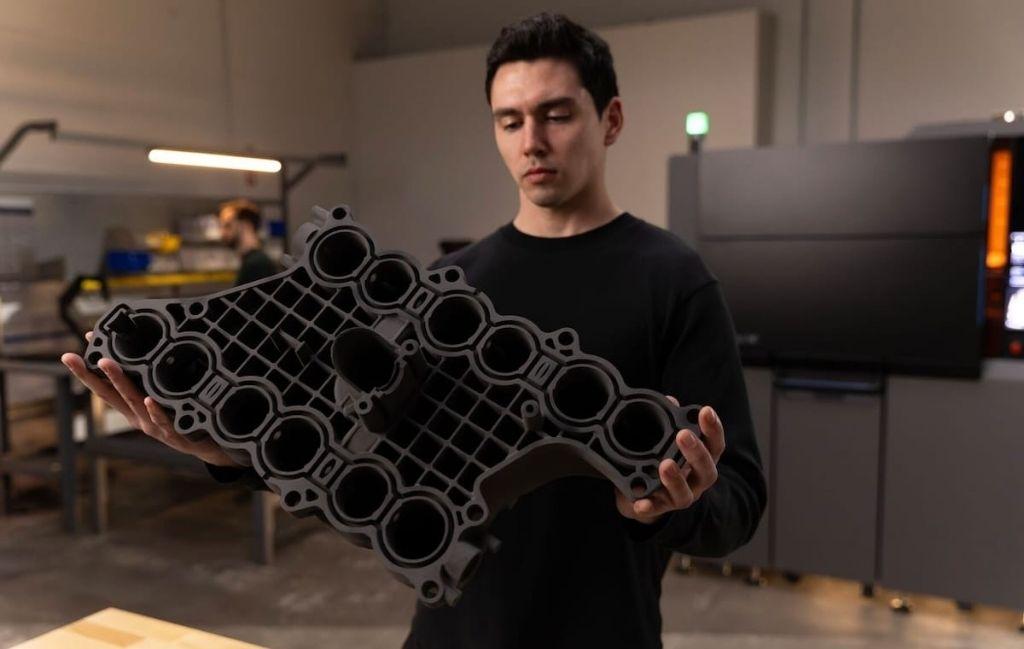
3D printing is additive by design. It uses only the material the part actually needs, plus a small allowance for supports. For a complex part with a lot of material removed during machining, such as one with internal cavities or thin walls, additive manufacturing can cut material waste dramatically compared with starting from a solid billet.
Injection moulding sits somewhere in between. Once a mould is running, the process itself produces relatively little scrap, and any sprue or runner waste is usually reground and reused. The environmental cost here is front-loaded into the mould rather than the ongoing production.
Where traditional manufacturing wins
Injection moulding and CNC machining were built for scale, and at high volumes they are hard to beat. Once a mould is tooled, the energy and material cost per part drops sharply, and a single mould can produce hundreds of thousands of identical parts before it wears out. 3D printing does not get cheaper or greener per part as volume increases in the same way, because each part still takes roughly the same print time and material regardless of how many you have already made.
Tooling is the trade-off. Producing a mould is energy-intensive and only makes sense if you are confident in the design and the volume to justify it. If the design changes after tooling is cut, that investment, and its environmental cost, is largely wasted.
Where 3D printing wins
3D printing has the advantage for low to mid-volume production, prototyping and parts with complex internal geometry.
- No tooling required. You skip the energy and material cost of producing a mould or machining fixture entirely, which matters most when you are not certain the design is final.
- Iteration without waste. Prototyping in 3D printing means testing a design change costs a print, not a new mould. This prevents mass-producing a flawed product, which is one of the biggest hidden sources of manufacturing waste.
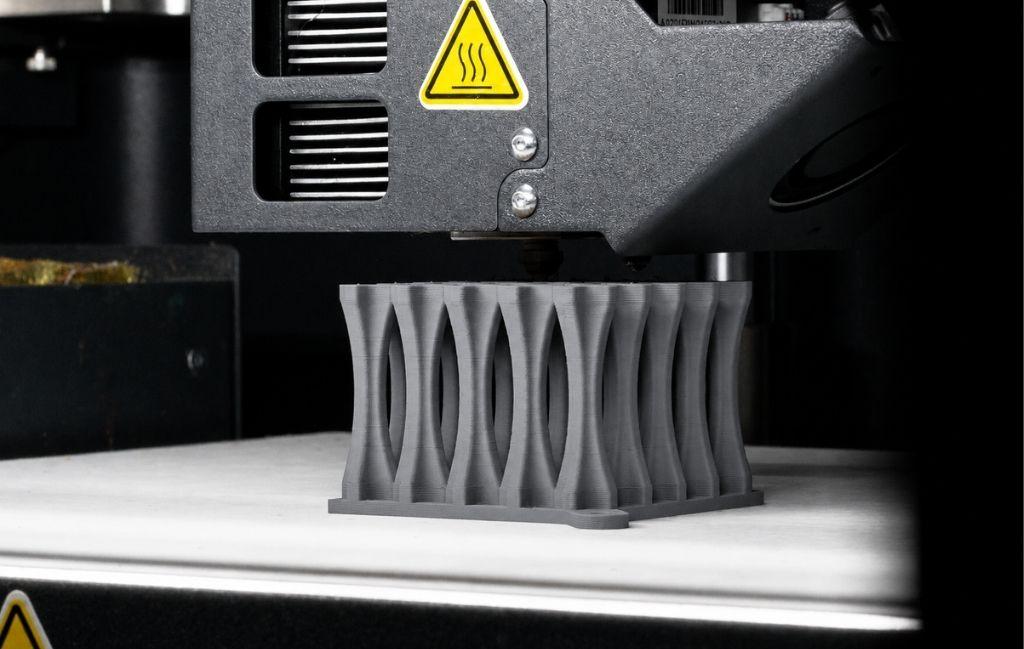
- Lightweighting. Internal lattices and topology-optimised geometry, hard or impossible to machine or mould, cut material use and reduce the weight of the finished part. In moving parts and vehicles, that weight saving lowers energy use for the part’s entire working life.
- On-demand and local production. Parts can be printed close to where they are needed and only when they are needed, cutting warehousing and the transport emissions of shipping stock from a distant factory.
Comparing the three processes
Factor | 3D printing | CNC machining | Injection moulding |
Material waste | Low, additive by design | High, 40 to 90 percent typical | Low once running, waste mostly in setup |
Tooling required | None | Fixtures only | Yes, energy-intensive to produce |
Best suited volume | Low to mid | Low to mid | High |
Cost and impact per part at scale | Stays roughly flat | Falls slowly | Falls sharply |
Design changes | Cheap, print again | Moderate cost | Expensive, may need a new mould |
The honest verdict
3D printing is not automatically the greener choice, but it usually is the more sustainable option when you are producing low volumes, prototyping, or making parts too complex to machine or mould efficiently. Traditional manufacturing tends to win once you are confident in a design and producing it at real scale, where the environmental cost of tooling gets spread thin enough to matter less per part.
The most sustainable approach for many businesses is not choosing one process over the other, but matching the process to the stage of the product. Prototype and low-volume production runs on a 3D printer, then move to injection moulding once the design is proven and the volume justifies the tooling. If you want to test a design before committing to either route, we offer 3D printed samples so you can assess strength, finish and fit before deciding how to scale production.
If you are weighing up whether to keep a part in 3D printing or move it to traditional manufacturing, get in touch and our team can talk through the volumes and geometry involved.