


Explainers

carbon fibre 3d printing

Carbon Fibre 3D Printing with Continuous Fibre Reinforcement – CFR

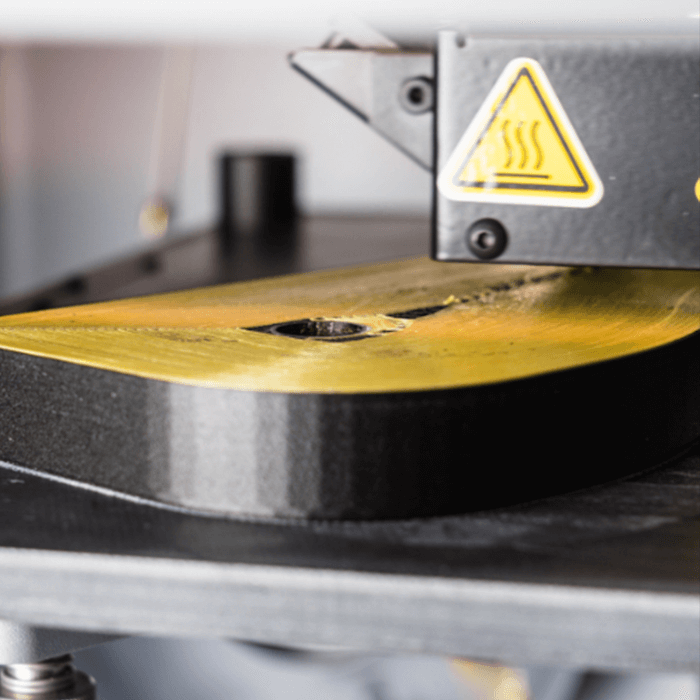
Continuous Fibre Reinforcement (CFR) can revolutionise engineering workflows by enabling the substitution of machined components with carbon fibre 3D printing.  CFR offers advantages over traditional FFF, such as increased stiffness, impact resistance, improved heat resistance, and extended durability. CFR harnesses FFF technology but introduces a secondary nozzle that feeds in

Carbon Fibre 3D Printing with Continuous Fibre Reinforcement – CFR Read More »

Silicone 3d printing

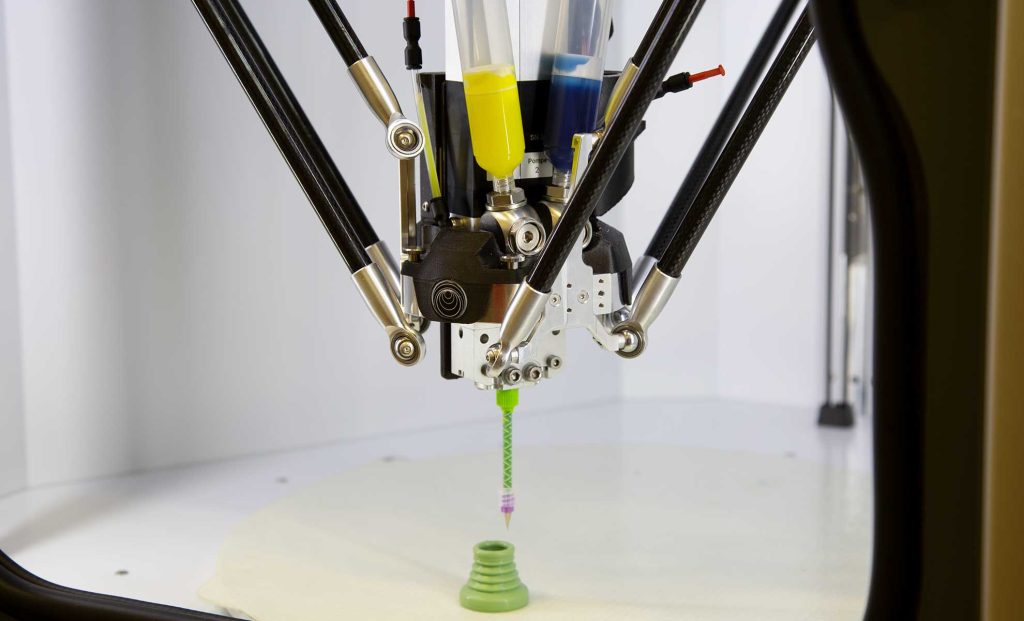
3D Silicone Printing: How It Works & Ideal Applications

3D silicone printing opens new opportunities for production alongside traditional techniques like injection moulding, compression moulding, and casting. Despite the potential, silicone’s use in additive manufacturing is relatively limited because very high viscosity makes it difficult to control out of the nozzle. This introduces flow rate problems in standard 3D

3D Silicone Printing: How It Works & Ideal Applications Read More »

A 3D printed Flexible filament part

Flexible Filament: When to Use it and Which You Should Choose?

Flexible filament mimics the performance of various rubber types, letting you manufacture flexible and elastic components with a 3D printer. 3D printing’s unique ability to produce complex forms and geometries opens the door to countless possibilities with flexible materials, from soft contacts for machine tools to gaskets and inner grippers

Flexible Filament: When to Use it and Which You Should Choose? Read More »

Biomedical models 3D printed in amber resin

How To Choose the Best 3D Printing Resin for Your Projects?

Rather than extruding thermoplastic in layers, stereolithography (SLA) 3D printers cure layers of liquid resin with a laser on the build platform to create solid models. Resins are liquid polymers that mimic the performance of thermoplastics or have a one-use purpose, like jewellery casting. The significant advantage of SLA is

How To Choose the Best 3D Printing Resin for Your Projects? Read More »

Meshmixer 3D model of a rabbit for 3D printing.

The Best Sculpting Software for 3D Modelling in 2023

Just as sculptors take clay and manipulate it, digital sculptors work with a computer, mouse, and software to produce 3D models.  3D sculpting software bridges the gap between physical sculpting and 3D modelling, letting artists sculpt 3D objects by pushing, pulling, smoothing, grabbing, and pinching digitised clay to produce real-life

The Best Sculpting Software for 3D Modelling in 2023 Read More »