




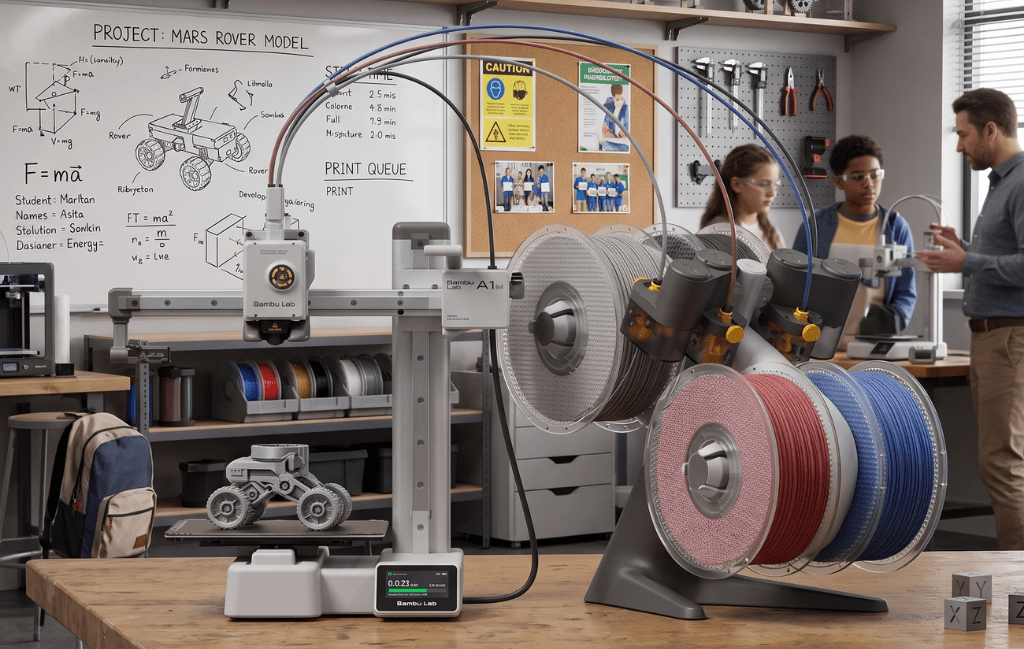
3D printers in schools are no longer a novelty. Walk into a well-equipped secondary school today and there is a reasonable chance you will find one in the design and technology room, the science lab, or even the library. The number of UK schools investing in 3D printing for education has grown steadily, and there are good reasons why.
This article covers what is driving that growth, what schools are actually doing with the technology, and how to choose the right classroom 3D printer for your setting.
The Case for 3D Printing in UK Schools
The curriculum pressure to deliver meaningful STEM experiences has never been stronger. Schools are expected to produce students who understand design, iteration, and problem-solving in a practical context. 3D printing sits right at that intersection.
When students design something in CAD software (Computer-Aided Design) and then hold a physical version of it in their hands 30 minutes later, something clicks that a worksheet never quite manages. The feedback loop between idea, digital model, and physical object is fast, tangible, and genuinely motivating.
There is also a question of relevance. Additive manufacturing (AM) is now part of the professional landscape across engineering, product design, healthcare, architecture, and manufacturing. Introducing students to 3D printers in schools means they arrive at further education or the workplace with a working knowledge of a technology that is genuinely in use.
Where 3D Printing Fits Into the Curriculum
One of the questions schools ask most often is whether 3D printing for education has a clear home in the timetable or whether it is just an add-on. The honest answer is: it fits in more places than most people expect.
Design and Technology
The most natural home for classroom 3D printers. Students can design components, prototype products, and test iterations without waiting weeks for parts to be sourced or cut. D&T lessons that used to involve sketching concepts now end with a printed object.
Science and Engineering
Schools are printing scale models of molecules, anatomical structures, geological formations, and mechanical assemblies. Biology teachers use 3D printed cell models. Physics classes print gears, levers, and pendulum components. The visual and tactile element helps.
Computing and CAD
Free-to-use CAD tools like Tinkercad are straightforward enough for Year 7 students to pick up in a single lesson. Pairing a CAD introduction with a working classroom 3D printer gives computing lessons a physical output that students respond to.
Art, Architecture, and Product Design
Sixth forms and colleges with product design or art and design courses have found real value in 3D printing in UK schools at this level. Students can produce architectural maquettes, jewellery prototypes, and sculptural work that would otherwise require specialist workshop skills or significant material cost.
Practical Benefits for Schools and Students
Beyond curriculum fit, there are straightforward practical benefits to having 3D printers in schools:
- Students develop skills in CAD, iterative design, and problem-solving that employers and universities actively look for.
- The technology is accessible. Modern FFF (Fused Filament Fabrication) desktop printers are reliable, affordable, and designed to be used by non-specialists.
- Print costs per part are low. A small PLA prototype typically uses a few pence worth of filament.
- Repairs and replacements for existing school equipment can sometimes be printed in-house, which is a genuine cost saving over time.
- Students with different learning styles engage differently with 3D printing. It tends to bring in students who struggle with written tasks but excel when there is a making element.
What to Look for in a Classroom 3D Printer
Not every 3D printer suits a school environment. When choosing classroom 3D printers, the things that matter most are not always the same as for a commercial workshop.
Ease of use
A printer that requires 20 minutes of setup time per print is not practical in a lesson context. Look for enclosed printers with auto-levelling beds and reliable slicing software that does not require extensive configuration.
Safety
Enclosed printers keep students away from hot components and reduce particulate emissions from printing. PLA filament (polylactic acid, derived from plant starch) is among the safest materials to print with. Good ventilation in the room remains sensible practice.
Reliability
In a school setting, a printer that fails mid-print or requires regular maintenance quickly becomes a logistical burden for staff. Schools benefit from printers from brands that offer good UK support and spare parts availability.
Print speed
A one-hour lesson is not long enough to print most meaningful objects if the machine runs slowly. Newer desktop printers have improved significantly on print speed, which makes lesson-length printing realistic for smaller parts.
Cost
Schools are budget-conscious. There are capable desktop printers available at a range of price points, and schools often start with one or two machines and expand as confidence grows. Consider total cost of ownership: filament cost, maintenance, and whether technical support is available locally.
3D Printers Worth Considering for Schools
If you are looking at specific machines, here are some that work well in educational settings. You can browse the full range on the Additive-X shop, but a few stand out for school use specifically.
Bambu Lab desktop printers
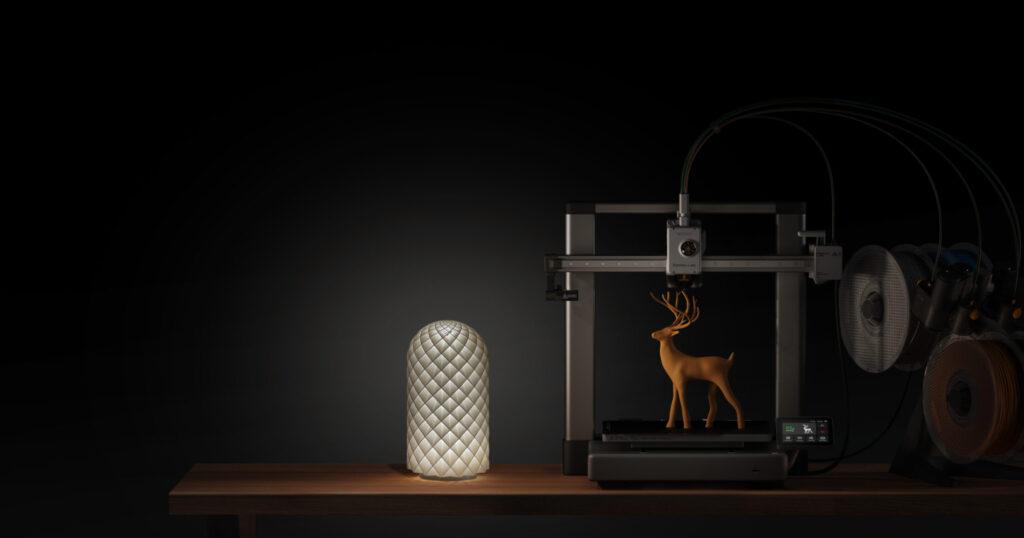
Bambu Lab machines have become popular in education because of their combination of speed, enclosed build chamber, and ease of use. The auto-calibration means less teacher time spent managing printer settings. Their Bambu Lab printers are available through Additive-X.
Formlabs SLA printers
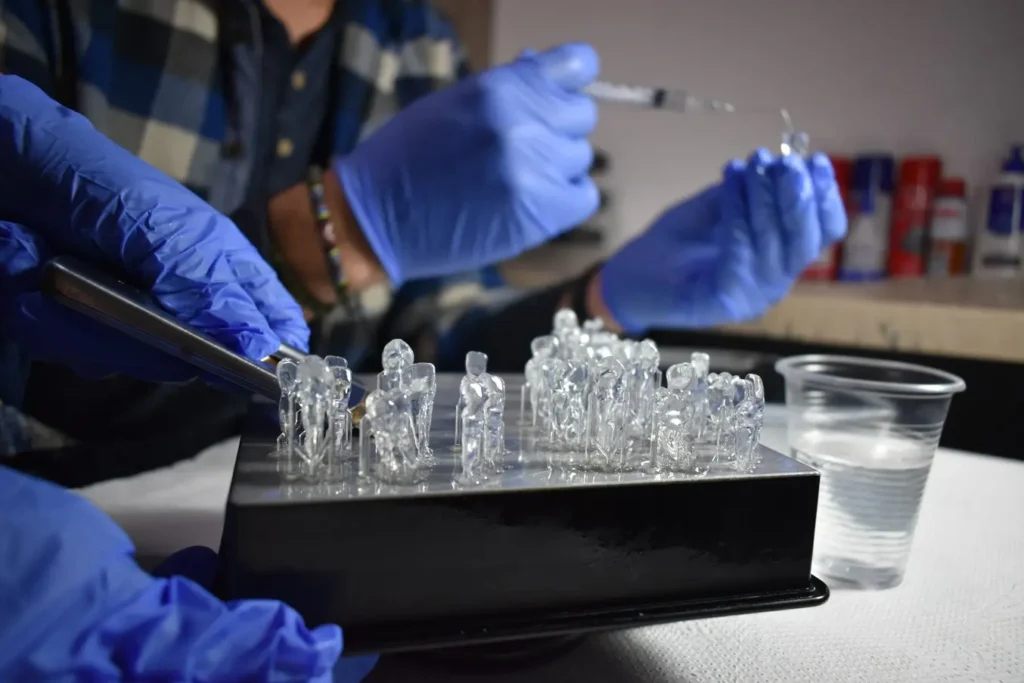
For schools with a product design or dental/medical focus at higher levels, SLA (Stereolithography) printers from Formlabs produce parts with a level of surface finish and detail that FFF printers cannot match. More involved in terms of post-processing, but the quality is markedly different. See the Formlabs range for options.
Filament and consumables
Most school-level printing runs on PLA, which is beginner-friendly, low-warp, and available in a wide range of colours. If students will be printing functional parts or anything that needs to handle some heat, PETG is worth knowing about. You can find filament and printing materials in the Additive-X shop.
Common Questions from Schools
Do you need a specialist to run it?
Not for standard desktop FFF printing. A motivated D&T or computing teacher can get up to speed quickly, and most modern machines handle the technical side well enough that the teacher’s role is more about managing the queue and supporting the design process than maintaining the printer.
What materials are safe for school use?
PLA is the standard starting point and is considered safe for school environments when printed in a well-ventilated space. Avoid ABS in enclosed classrooms without dedicated extraction, as it emits styrene during printing. Resin-based printers (SLA) require more careful handling and are better suited to post-16 settings with appropriate safety provisions.
How much does it cost to run?
Running costs are low. A 1kg spool of PLA typically costs between £15 and £30 and covers a significant number of student projects. Power consumption for a desktop FFF printer is similar to a kettle running intermittently. The biggest cost is the initial hardware purchase.
Is there curriculum support available?
Yes, and it has grown substantially. Organisations like the Design and Technology Association (D&T Association) offer resources and CPD linked to digital fabrication. Bambu Lab and Formlabs both publish educational resources. Additive-X also offers demonstrations and training for schools considering a purchase.
What Schools Are Saying
Feedback from educators who have introduced 3D printing in UK schools tends to follow a pattern. The first reaction from students is curiosity. The second is ownership, particularly when the object they are printing is something they designed themselves. Teachers report that the technology works well as a motivator for students who do not always respond to more traditional tasks.
The practical challenges are manageable. Print queues need managing. Occasional failed prints need explaining. Files need to be set up correctly before printing begins. But these are also learning moments, and schools that have embedded 3D printing into their curriculum tend to treat the problems as part of the process.
The Raspberry Pi Foundation and STEM Learning UK both publish case studies and teacher guidance on digital making, including 3D printing, which are worth looking at if you are building a case internally for investment.
Getting Started With 3D Printing in Your School
If you are thinking about bringing classroom 3D printers into your school, a few practical steps help things go smoothly.
- Start with one machine. Pilot with a single printer in one department. Get a small group of students using it well before expanding.
- Choose an accessible CAD tool. Tinkercad is free, browser-based, and genuinely suitable for secondary-age students. Fusion 360 is free for education and goes further for older students.
- Involve students in the decision. Showing students different printer options and asking what they want to make first creates buy-in before the machine even arrives.
- Plan the filament budget separately. The printer is a one-off cost. Filament is ongoing. Build a small annual materials budget from the start.
- Talk to suppliers who understand education. A supplier who has worked with schools before can advise on appropriate machines and flag things that matter in a teaching environment.
Ready to Explore 3D Printers for Your School?
Additive-X supplies 3D printers to schools, colleges, and universities across the UK. If you want to talk through which machine suits your setting, your budget, and what you are planning to teach, the team at Additive-X is happy to help. You can call on 01765 694 007, browse the full shop, or get in touch to arrange a demonstration at their showroom in Ripon, North Yorkshire.
3D printing in schools is not about replacing traditional making skills. It is about adding a tool that lets students move between digital and physical faster, iterate more, and engage more deeply with the design process. For schools thinking about STEM, product design, or just giving students skills that matter in the real world, it is a reasonable investment to consider.