
Metals

View as Grid List
Page
per page
Set Descending Direction
View as Grid List
Page
per page
Set Descending Direction
How does metal FFF 3D printing work?

Metal FFF printing extrudes filament loaded with metal powder in a polymer binder, producing a green part that is then debound and sintered in a furnace to become a solid metal component.

Is metal FFF cheaper than traditional metal 3D printing?

Metal FFF systems, such as those from Markforged, are generally more affordable to buy and operate than powder-bed metal printers, though they typically require a secondary furnace.

What metals can be printed with metal FFF?

Common metal FFF materials include stainless steel, tool steel and copper, with the choice depending on the mechanical, thermal or conductive properties the part needs.

What is the shrinkage rate for metal FFF parts?

Sintered metal FFF parts typically shrink by around 15 to 20 percent from the printed green part, and this is accounted for automatically in the printer's software during file preparation.


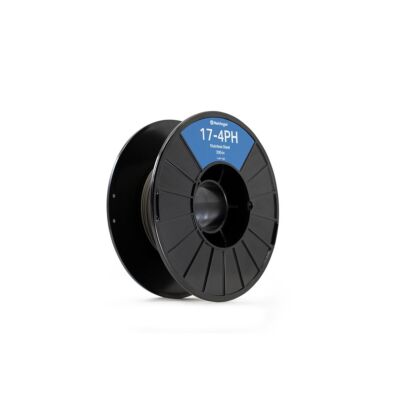
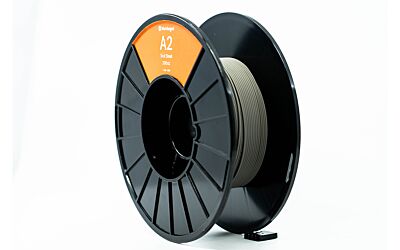
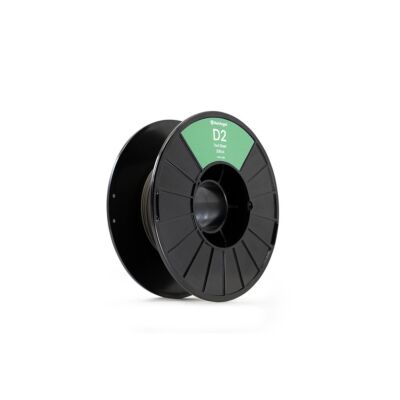
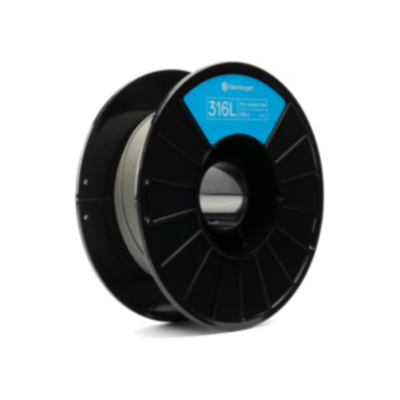
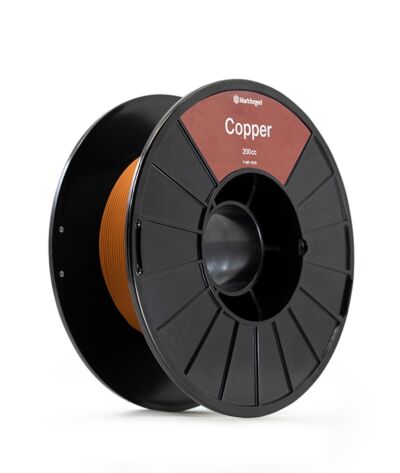
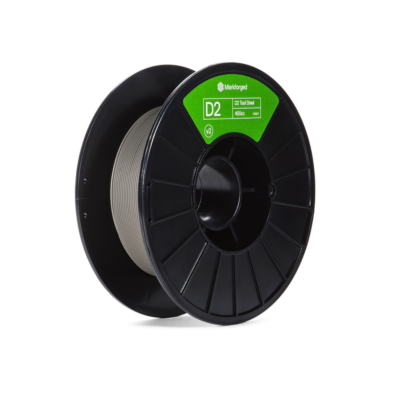
It’s a simple, accessible path to producing strong, functional stainless-steel parts without compromising on precision or durability. Perfect for prototyping, tooling and short-run production, these filaments bring metal capabilities to your desktop or production floor. Trusted Brands, Proven Results Our current range includes Markforged 17-4 PH and 316L Stainless Steel, as well as copper, inconel 625 and Tool Steels. Each markforged 3D printer metal filament is formulated for ease of use, consistent extrusion and excellent part performance post-sintering. You can expect: - Full metal part performance: Achieve mechanical strength and corrosion resistance comparable to cast metal. - Cost-effective production: Create steel parts without CNC or MIM costs. - Compatible workflows: Use your existing open-material FFF 3D printer and partner with sintering service providers or in-house equipment. These filaments are ideal for engineers, manufacturers, and designers looking to bring functional metal parts to life quickly. Applications That Go Beyond Prototypes This isn’t just metal-like printing, it’s real steel performance. That’s why 3D printer metal filament is used in a wide range of industries, including: - Automotive: Low-volume functional brackets and heat-resistant components - Medical and dental: Custom surgical tools and fixtures - Aerospace: Lightweight structural parts and housings - Manufacturing: Custom jigs, fixtures and replacement parts on demand Whatever your use case, metal filament opens up powerful new possibilities with minimal infrastructure changes. Ready to Get Started? If you're ready to explore the potential of 3D printer metal filament, our team is here to help. Whether you’re choosing between materials or looking for guidance on sintering partners, we’re just a call or click away. Explore our range of 3D printer metal filament today.
 
Don't just take our
word for it...